
Leave Your Message

How to Choose Multifunctional Glass for Global Sourcing?

Global sourcing of Multifunctional Glass is not simply a search for attractive panels. It is a performance decision involving heat, light, safety, logistics, and long-term maintenance. A product may look excellent in a showroom, yet fail when exposed to coastal humidity, winter frost, or repeated transport handling.

Stephen Selkowitz, a respected building-performance expert, offers a useful principle: “The best window is the one that delivers reliable performance in its intended environment.” That idea should guide every supplier conversation. Buyers need more than a catalogue and a laboratory certificate. They should request verified data for visible light transmission, solar heat gain, insulation, acoustic control, impact resistance, and service life.

Ask specific questions. What happens after ten years of switching cycles? Can the coating tolerate cleaning chemicals? Are replacement components available near the project site? How does the supplier control colour variation between production batches? These details often reveal more than polished marketing language.

Global sourcing also requires careful document review. Check test methods, certification scope, factory quality systems, packaging design, export experience, and warranty terms. Confirm whether performance data applies to the complete assembly or only one glass layer. That difference matters.

No checklist is perfect. Conditions change. Supplier claims can be incomplete. A responsible buyer should compare samples, inspect production records, and involve engineers before signing a purchase agreement. The right Multifunctional Glass balances advanced features with dependable delivery, transparent evidence, and practical maintenance. Fancy technology is not enough. Reliable performance is the real advantage.

How to Choose Multifunctional Glass for Global Sourcing?

Define the Functions and Performance Requirements of the Glass

How to Choose Multifunctional Glass for Global Sourcing?

Define the Functions and Performance Requirements of the Glass

Before contacting suppliers, define what the glass must do in the finished space. A multifunctional panel may control heat, reduce noise, improve safety, and support privacy. Write each function separately. Do not start with appearance. In a hotel lobby, large panels may face strong afternoon sunlight and constant foot traffic. In an office, glare control and speech privacy may matter more. That context changes the specification.

Translate each function into measurable requirements. Solar control can include visible light transmission, solar heat gain, and ultraviolet reduction. Acoustic performance should state the target rating and the test method. Safety requirements may involve impact resistance, edge treatment, and breakage behavior. Thermal performance should include the target U-value and installation conditions. My first sourcing specification was too broad. Suppliers interpreted “high performance” differently, which created confusing quotations and delayed comparisons.

Global sourcing also requires practical performance checks. Consider humidity, temperature changes, transport vibration, and local installation skills. Ask for current test reports, material declarations, production tolerances, and batch traceability. Confirm maximum dimensions, coating orientation, drilling limits, packaging strength, and replacement procedures. Request a sample or pilot order before approving a large shipment. Inspect optical distortion, color consistency, edge quality, and surface marks after transport. Small details matter.

Compare Glass Types, Coatings, and Structural Configurations

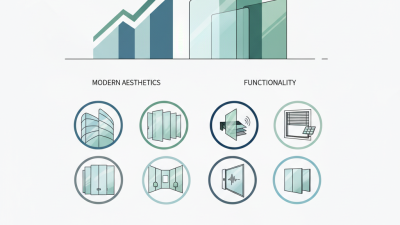
Choosing multifunctional glass for global sourcing starts with comparing the base glass, not the appearance alone.

Soda-lime glass suits many standard applications and offers broad availability. Borosilicate glass handles thermal shock better, but usually costs more. Tempered glass improves impact resistance and breaks into smaller fragments. Laminated glass holds together after breakage, making it useful for overhead, façade, and security applications. The right type depends on load, temperature changes, safety requirements, and processing limits.

Coatings can change both performance and maintenance. Low-emissivity coatings reduce heat transfer, while solar-control coatings help limit glare and indoor heat. Anti-reflective coatings improve visibility in display or daylight-facing applications.

However, coating durability depends on placement, cleaning methods, and edge protection. A lower U-value is not always the best choice. Solar gain, local climate, orientation, and frame design must be reviewed together. Small misunderstandings here can create expensive redesigns.

Structural configuration also affects real-world results.

Monolithic glass is simple and economical, while insulated glass units improve thermal and acoustic performance. Laminated insulated units add safety and sound reduction, but increase weight and fabrication complexity. Triple glazing may perform well in cold climates, yet its added weight can challenge hardware and installation.

Ask suppliers for independent test reports, dimensional tolerances, coating position, sealant compatibility, and packing details. Standards differ between markets, so one certificate may not cover every destination. A practical sourcing plan should include sample testing, site conditions, and a clear replacement process. Mistakes still happen, especially when specifications look complete but omit edge quality or transport risks.

Evaluate Supplier Capabilities, Certifications, and Quality Systems

Choosing multifunctional glass for global sourcing requires more than comparing thickness and price. Supplier capability should match the product’s real function, such as insulation, solar control, safety, or acoustic performance. Ask for process maps covering cutting, tempering, laminating, coating, and final inspection. A capable factory can explain its furnace limits, coating uniformity, edge quality, and testing frequency without vague promises.

Certifications provide useful evidence, but they are not proof of consistent production. The ISO Survey 2022 recorded 1,265,216 ISO 9001 certificates worldwide, showing broad adoption of quality systems. Yet a certificate cannot replace an audit. Check calibration records, nonconformity reports, corrective actions, and batch traceability. Request recent test reports from accredited laboratories. Review results for visible distortion, thermal stress, adhesion, light transmission, and dimensional tolerance. Small details matter.

Energy performance also deserves verification. The European Commission’s JRC glass manufacturing report notes that increasing recycled glass content can reduce furnace energy demand; however, contamination control remains critical. A supplier should show cullet inspection procedures and production data. I would also compare Cp and Cpk values for key dimensions, not only average results. That may feel excessive. It prevents expensive surprises. Some suppliers may present excellent samples while their routine records remain incomplete. That weakness deserves attention before approval.

How to Choose Multifunctional Glass for Global Sourcing? - Evaluate Supplier Capabilities, Certifications, and Quality Systems
Evaluation Dimension What to Verify Relevant Technical Reference or Evidence Recommended Acceptance Requirement Weight Decision Status
Product Portfolio Ability to supply multifunctional glass combinations, including tempered, laminated, insulated, low-emissivity coated, solar-control, fire-rated, and decorative glass. Approved product list, technical data sheets, configuration matrix, and representative project records. The supplier should clearly define compatible combinations, maximum dimensions, thickness ranges, processing limits, and intended applications for each product type. 10% Pass when documented
Glass Substrate Quality Consistency of float glass, patterned glass, or other substrate used for further processing. Applicable product specifications, incoming inspection records, thickness records, visual inspection procedures, and traceability documents. Material grade, thickness, coating orientation, optical appearance, and defect limits must match the approved purchase specification and sample. 8% Specification-based
Thermal Toughening Control of heating, quenching, flatness, fragmentation, and surface compression for safety glass. EN 12150-1 for thermally toughened soda-lime silicate safety glass; heat-soak testing may be specified for nickel sulfide inclusion risk. Test reports must identify glass type, thickness, dimensions, production batch, test method, and results. Heat-soak testing should be included when required by the project or market. 10% Critical check
Laminated Glass Control of interlayer selection, lamination temperature, pressure, edge quality, adhesion, and durability. EN 14449 and ISO 12543 series for laminated glass; interlayer technical data and durability test records. Interlayer type must be suitable for the intended exposure, safety function, acoustic requirement, UV condition, and operating temperature. 9% Application-specific
Insulating Glass Units Performance of spacer systems, sealants, gas filling, cavity thickness, moisture control, and edge sealing. EN 1279 series for insulating glass units; gas-fill records, dew-point testing, sealant compatibility data, and production traceability. The supplier should demonstrate verified cavity design, sealant compatibility, gas-fill control, edge-seal inspection, and declared thermal or acoustic performance. 10% Critical check
Coating Capability Capability to process or source low-emissivity, solar-control, reflective, or other functional coatings without damaging the coating layer. EN 1096 series for coated glass; coating position, emissivity, solar-factor, light-transmission, and durability data. Coating position, visible light transmission, solar control values, emissivity, color tolerance, handling rules, and edge-deletion requirements must be documented. 9% Verify by test data
Safety Performance Resistance to human impact, breakage behavior, and safe-glazing classification. EN 12600 pendulum impact classification, applicable building codes, and market-specific safety-glazing requirements. Safety classification must correspond to the installation location, glass build-up, thickness, support condition, and legal requirements of the destination market. 10% Mandatory for safety use
Quality Management System Documented control of purchasing, production, inspection, nonconformities, corrective actions, and process changes. ISO 9001 certificate, certificate scope, internal audit records, corrective-action logs, and controlled work instructions. Certification should be current, issued by a competent certification body, and cover the relevant manufacturing or processing site and product scope. 10% Required evidence
Testing and Calibration Reliability of laboratories, measuring equipment, calibration activities, and reported test results. ISO/IEC 17025 accreditation for laboratories where applicable; calibration certificates traceable to recognized measurement standards. Critical test equipment must have valid calibration status, defined intervals, acceptance criteria, and records linking results to production batches. 7% Audit recommended
Factory Process Control Control of cutting, edging, drilling, washing, printing, tempering, laminating, assembly, and final inspection. Process flow chart, control plan, inspection frequency, first-article approval, maintenance records, and operator training records. Each critical process should have documented parameters, responsible personnel, inspection points, reaction plans, and batch-level traceability. 9% On-site verification
Traceability and Documentation Ability to identify raw materials, production dates, equipment, operators, inspection results, and shipment records. Batch numbers, labels, packing lists, certificates of conformity, inspection reports, drawings, and change-control records. Traceability should connect each delivered unit or crate to the approved specification, production batch, inspection results, and shipping documentation. 6% Required for claims
Export and Regulatory Readiness Ability to meet destination-market rules for construction products, safety glazing, labeling, packaging, and import documentation. Destination-country regulations, applicable CE or other conformity documentation, safety data, customs documents, and product declarations where required. Compliance claims must be limited to the exact product, factory, test configuration, and market covered by the supporting documentation. 7% Market-dependent
Packaging and Logistics Protection against edge damage, moisture, abrasion, impact, and incorrect loading during international transportation. Export packing specification, crate design, loading diagrams, moisture protection method, lifting instructions, and damage-claim procedure. Packaging must be suitable for the glass size, weight, route, handling equipment, container conditions, and agreed delivery terms. 5% Validate with trial shipment
Scoring guidance: assign each dimension a score from 0 to 5, multiply the score by the stated weight, and require documented evidence for all critical checks. Confirm the current edition and scope of every cited standard before placing an order.

Assess Global Costs, Regulations, Logistics, and Supply Risks

How to Choose Multifunctional Glass for Global Sourcing?

Choosing multifunctional glass requires more than comparing the factory quotation. Assess the complete landed cost, including tooling, testing, packaging, insurance, duties, and inland delivery. A lower unit price can disappear after fragile-crate handling and port storage charges.

Costs hide elsewhere.

Regulations vary by destination and application.

Glass for façades, interiors, vehicles, or food-contact areas may require different performance documents. Request test reports for thermal insulation, safety impact, light transmission, and chemical content. Confirm whether certificates are accepted in the target market, not merely issued by a laboratory. Keep evidence current. Requirements can change during a project.

Logistics also shape product selection.

Large insulated panels need reinforced crates, moisture protection, and accurate container planning. Ask suppliers about maximum panel sizes, breakage records, lead times, and replacement procedures. Supply risks increase when one facility produces coatings, laminates, and hardware without backup capacity. A dual-source plan may cost more initially, but it protects construction schedules.

Not always. Qualify the second source before an emergency appears.

In one sourcing review, packaging damage was underestimated because the quotation covered only production.

That mistake delayed installation and weakened the expected savings. A better evaluation uses sample shipments, landed-cost models, supplier audits, and documented corrective actions. Review payment terms and production capacity as carefully as technical specifications. Availability data may look impressive, yet seasonal energy shortages or raw-material delays can change the picture quickly.

Validate Samples and Establish Long-Term Sourcing Criteria

How to Choose Multifunctional Glass for Global Sourcing?

Validate Samples and Establish Long-Term Sourcing Criteria

A sample should prove more than appearance. Check clarity, thickness, edge finishing, weight, and surface uniformity under natural light. Test its intended functions, such as heat resistance, sound reduction, privacy control, or easy cleaning. Record results in a shared specification sheet. Include acceptable ranges, not vague descriptions like “premium quality.” A sample may look perfect on a showroom table. It can still fail after transport, installation, or repeated use.

Request several production samples from different batches. Compare color, flatness, dimensions, and protective packaging. Ask for test methods, material certificates, and traceability records. Independent laboratory verification can confirm critical performance claims. Factory audits also reveal practical details, including storage conditions and inspection routines. Photos are useful, but they cannot replace physical checks.

Build long-term sourcing criteria before placing large orders. Consider defect rates, response time, replacement procedures, production capacity, and communication quality. Track performance through a simple supplier scorecard. Our early mistake was focusing too heavily on unit price. Later delays created higher costs and damaged project schedules. A lower price is not always better value. Review criteria after each shipment, because real handling often exposes weaknesses that samples hide. Keep one approved reference sample for future comparisons. Small differences matter.

How to Choose Multifunctional Glass for Global Sourcing?

Sample Validation and Long-Term Sourcing Criteria

Use these criteria as a practical sourcing baseline when validating samples. Performance testing should confirm thermal insulation, solar control, visible light transmission, acoustic performance, safety compliance, and production consistency before establishing long-term supplier requirements.