+86 13438161196


Choosing reliable Glasses And Cups manufacturers in China requires more than comparing prices. A factory may display polished samples, yet its real capability appears in production details. Look closely at glass clarity, rim smoothness, wall thickness, handle strength, and packaging protection. These small features affect customer satisfaction after delivery.
Dr. John C. Mauro, a respected glass scientist and materials expert, offers a useful principle: “Good glass design begins with understanding how composition controls performance.” This idea matters when evaluating manufacturers. Soda-lime glass suits many everyday tumblers. Borosilicate glass performs better under sudden temperature changes. Lead-free crystal can provide brilliance without compromising responsible product standards. The right choice depends on use, budget, appearance, and testing requirements.
This guide examines China’s leading manufacturers of drinking glasses, coffee cups, wine glasses, mugs, and custom glassware. It considers manufacturing experience, material knowledge, export reliability, quality-control systems, and customization services. Factory visits, sample approvals, and third-party inspections can reveal more than a sales brochure. Ask about furnace capacity, mold development, annealing, printing accuracy, and breakage testing. Also check whether packaging survives real transport conditions.
Some evaluations remain imperfect. Public information can become outdated, and attractive websites do not guarantee consistent output. A supplier may excel at volume but struggle with small orders. Another may offer beautiful handmade pieces but lack dependable delivery records. Therefore, buyers should compare evidence carefully, request current samples, and document every specification before placing an order. That practical discipline makes this list more useful for importers, retailers, hospitality brands, and product developers.
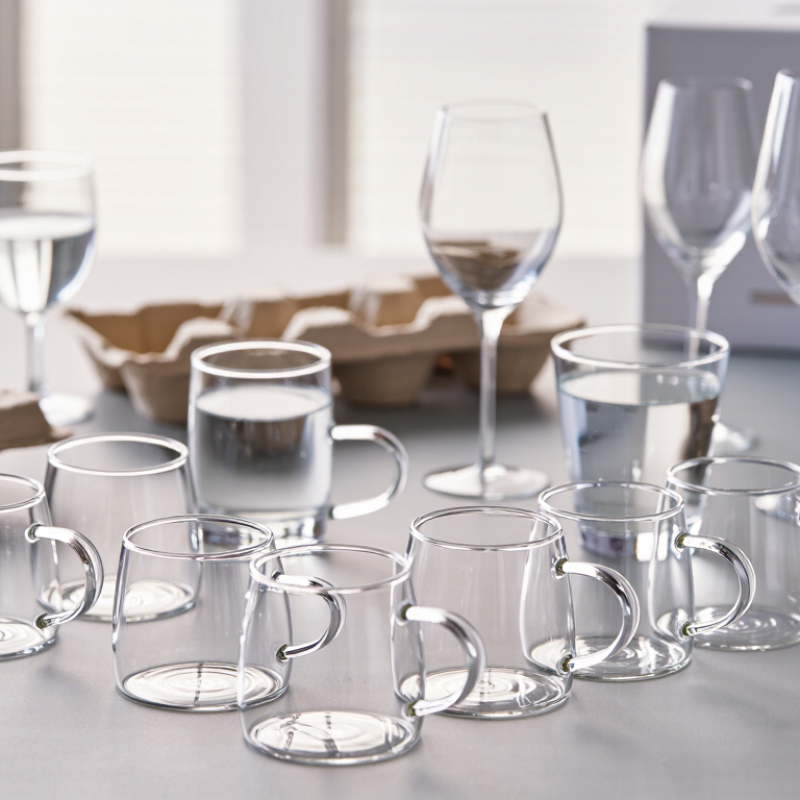
China’s glasses and cups manufacturers serve hotels, restaurants, retailers, and household buyers worldwide. Their product scope is broad.
Common products include tumblers, stemware, mugs, dessert cups, storage jars, and heat-resistant drinking glasses. Soda-lime glass supports everyday use at competitive prices. Borosilicate glass handles sudden temperature changes more reliably. Tempered glass offers improved resistance for busy food-service environments. Designs range from clear straight-sided cups to textured, colored, and decorated collections.
Manufacturers also play an important role in China’s wider glassware industry. They connect material processing, mold development, decoration, packaging, and export logistics. Experienced factories can adjust capacity for small trial orders or large seasonal programs. Buyers should examine material specifications, rim finishing, wall thickness, and dimensional tolerance. Ask for batch records and safety test reports. Samples matter.
A polished sample is not enough. Production consistency can still vary. In practical procurement, factory communication often reveals more than a catalog. Reliable suppliers explain inspection methods and disclose reasonable limitations. They should check clarity, bubbles, cracks, print adhesion, and carton protection. Some workshops still depend heavily on manual inspection, which can create uneven results. That weakness deserves attention. Strong manufacturers use documented checks at incoming, in-process, and final stages. Their role extends beyond making containers. They help buyers balance usability, appearance, cost, and responsible material choices.
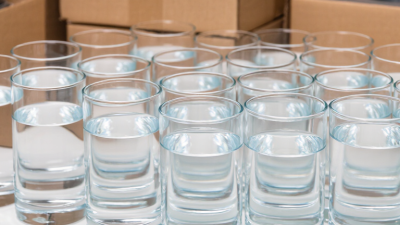
China offers a wide range of glass and cup manufacturers, but material selection should come before price. Soda-lime glass suits everyday tumblers, jars, and restaurant cups. It is economical and clear. Borosilicate glass handles sudden temperature changes better. It fits tea pots, laboratory-style cups, and heat-resistant drinkware. Still, “heat-resistant” is not unlimited.
ISO 7086 provides safety requirements for glass hollowware used with food. Buyers should request test reports covering rim strength, thermal shock, and chemical durability. FDA rules also matter when products enter the United States. Manufacturers should provide food-contact documentation, migration testing, and traceable batch records. A certificate alone may not prove consistent production quality. Factory inspection remains useful.
Tips: Ask for samples from different production batches. Pour hot water into a room-temperature cup during controlled testing. Check for cloudy areas, sharp rims, bubbles, and uneven thickness. Confirm whether decorations, coatings, and printed markings meet food-contact requirements. Keep written specifications for capacity, tolerance, packaging, and drop protection. Small differences can create large breakage rates. No factory is perfect, and even a strong supplier may need closer review after design changes.
Choosing the best glass and cup manufacturers in China requires more than comparing prices. Forming quality begins with stable furnace temperature, clean molds, and controlled gob weight. Operators inspect rims, bases, and wall thickness during production. Uneven thickness often causes weak points and poor balance.
According to the 2023 United Nations Comtrade database, China remains a major exporter of glassware, making process control especially important across large-volume orders.
Small flaws matter.
Annealing reduces internal stress after forming. A controlled cooling curve helps prevent delayed cracking during packing or use.
Decoration comes later, through spraying, printing, frosting, or electroplating. Each method needs adhesion testing, color checks, and careful curing.
The International Organization for Standardization’s ISO 2859-1 and ANSI/ASQ Z1.4 provide a practical basis for AQL inspection.
Under AQL 2.5, a 3,201–10,000-piece lot commonly uses a 200-piece sample at General Inspection Level II, with acceptance numbers defined by the sampling table.
AQL 2.5 does not mean zero defects. It is a statistical acceptance method, not a promise of perfection.
In supplier audits, I would also request annealing records, decoration test results, and photos of rejected pieces.
Some factories document beautifully but inspect too late. That weakness deserves attention.
Selecting a glass and cup manufacturer requires more than comparing catalog prices. MOQ often reveals how flexible a factory can be. A supplier offering 500 pieces may suit a trial order, while another requiring 10,000 pieces may provide stronger unit pricing. Ask whether the MOQ applies to each color, shape, or decoration. This detail can change your budget quickly.
Capacity should be checked against real production evidence, not only written claims. Request monthly output, current production schedules, and photos of forming, annealing, inspection, and packing areas. A factory producing 200,000 cups monthly may still struggle during peak seasons. Ask about backup equipment and worker shifts. Capacity is not unlimited.
Lead time should include sampling, mold preparation, production, inspection, and shipping arrangements. Request a stage-by-stage timeline with fixed checkpoints. Export data adds another layer of confidence. Review recent shipment records, destination markets, product descriptions, and order frequency when available through lawful trade databases. Repeated exports suggest operational experience, but data may be incomplete or outdated. Verify it carefully.
Payment terms, breakage rates, packaging tests, and quality records also matter. Request a pre-shipment inspection with measurable standards, such as rim smoothness, glass thickness, color consistency, and carton strength. A low price can hide weak packaging. I have seen buyers focus heavily on MOQ and overlook replacement procedures. That was a costly gap. My checklist is not perfect either, so each supplier should be tested with a small, documented order.
The chart presents non-company-specific reference ranges commonly used when screening Chinese glassware suppliers. MOQ and monthly capacity are measured in pieces, while lead time is measured in days. Actual figures should be verified through supplier quotations, factory audits, and export documentation.
Reference screening ranges: MOQ 500–5,000 pieces; monthly production capacity 100,000–1,000,000 pieces; standard lead time 20–60 days; export track record 5–20 years. These are evaluation references rather than audited company-level statistics.
China’s glass and cup industry covers high-volume factories, specialized workshops, and export-focused producers. A reliable manufacturer should provide clear certification records, not vague claims. ISO 9001 can indicate controlled quality procedures. Food-contact products may require FDA, LFGB, or EU test documentation. Check whether each certificate covers the actual factory and product range. Certificates are useful evidence, but they are not a complete quality guarantee.
Production scale should match your purchasing plan. Large facilities may operate automated forming lines, annealing ovens, decoration equipment, and carton testing stations. Ask for monthly capacity, furnace output, mold lead times, and recent defect rates. A smaller factory may offer more flexible customization and lower minimum quantities. It may also depend heavily on manual inspection. That difference matters.
Buyer fit often appears in small details. A hotel supplier may need stable replenishment, strong packaging, and consistent sizing. A promotional buyer may prioritize custom colors, logos, and short development cycles. Request samples from normal production, not only showroom pieces. Compare rim smoothness, glass thickness, weight, print alignment, and carton protection. Confirm communication speed and corrective-action procedures before placing a large order. A polished showroom can mislead. I would still verify production records, audit findings, and sample consistency. Mistakes happen, even in experienced factories. The better partner admits them early and documents the remedy.
An objective comparison of major Chinese glassware manufacturing categories, compliance requirements, production indicators, and typical buyer suitability.
| Manufacturer Type | Main Product Range | Typical Material and Process | Relevant Certifications and Compliance | Production-Scale Indicators | Customization Capability | Best Buyer Fit | Key Verification Points |
|---|---|---|---|---|---|---|---|
| Mass-Production Soda-Lime Glass Factory | Tumblers, beverage glasses, jars, stemware, and table glasses | Soda-lime glass; automatic pressing, blowing, or press-and-blow production; annealing and inspection lines | ISO 9001 is commonly requested. Food-contact documentation may include EU Regulation (EC) No. 1935/2004, relevant national requirements, and U.S. FDA food-contact compliance where applicable. | Continuous furnaces and automated lines; usually suited to repeat orders from several thousand pieces upward; higher-volume lines can operate continuously. | Standard mold development, logo decoration, screen printing, spraying, decals, and color options | Supermarket programs, restaurant chains, hospitality groups, importers, and promotional campaigns | Furnace ownership, mold fees, line speed, breakage rate, dimensional tolerance, lead time, and third-party food-contact test reports |
| Borosilicate Glass Specialist | Heat-resistant cups, tea glasses, coffee servers, laboratory-style drinkware, and oven-safe glassware | Borosilicate glass with lower thermal expansion than ordinary soda-lime glass; tubing, blowing, pressing, or heat-forming processes | ISO 9001 may be used for quality management. Buyers should request thermal-shock testing, dimensional inspection, and applicable food-contact declarations for the destination market. | Usually medium to high capacity; automated tubing and forming equipment supports repeat production, while complex shapes may require more manual operations. | Double-wall construction, infusers, handles, lids, colored glass, printed markings, and custom shapes | Specialty beverage brands, tea and coffee retailers, kitchenware distributors, and premium gift suppliers | Glass composition, wall thickness, thermal-shock results, joint quality, leakage tests for double-wall products, and safe-use instructions |
| Double-Wall Glass Cup Producer | Insulated coffee cups, tea cups, espresso glasses, dessert glasses, and serving vessels | Commonly borosilicate glass; two glass walls are joined to create an insulating air gap | Food-contact documentation for the glass and any silicone components; quality systems such as ISO 9001 may be requested; silicone parts require separate material verification. | Medium-scale production is common; capacity depends heavily on manual finishing, joining, inspection, and rejection control. | Custom volume, rim shape, logo printing, silicone sleeves, lids, gift boxes, and coordinated accessories | E-commerce sellers, café suppliers, corporate gift buyers, and premium homeware distributors | Condensation performance, vacuum or air-gap integrity, leakage, thermal cycling, rim uniformity, and packaging drop tests |
| Tempered Glassware Manufacturer | Durable tumblers, stackable drinking glasses, restaurant glassware, and high-use tableware | Soda-lime glass subjected to controlled heating and rapid cooling to improve mechanical and thermal performance | Applicable glassware safety and food-contact requirements; buyers should request tempering-process records and product-specific impact or thermal-shock test results. | High-volume potential when standardized molds and automated tempering equipment are used; suited to regular replenishment programs. | Moderate customization; best for stable shapes, stackable designs, volume graduations, and printed decoration | Hotels, restaurants, catering operators, institutional buyers, and commercial kitchen distributors | Temper uniformity, edge strength, breakage behavior, stackability, thermal-shock performance, and dishwasher-use guidance |
| Hand-Blown and Artisan Glass Workshop | Decorative glasses, colored tumblers, sculptural cups, vases, and small-batch hospitality pieces | Hand-blown soda-lime or borosilicate glass; manual shaping, annealing, cutting, polishing, and surface finishing | Compliance depends on the destination market and intended use. Food-contact declarations and migration testing are important when products are sold for drinking or serving. | Low to medium output; production is labor-intensive, and capacity varies with design complexity, artisan availability, and inspection requirements. | Very high design flexibility, custom colors, irregular forms, textured surfaces, and limited editions | Boutique retailers, interior designers, premium restaurants, galleries, and seasonal collections | Sample consistency, color variation, annealing quality, rim safety, dimensional tolerance, packing method, and realistic monthly capacity |
| Glassware Decoration and Finishing Specialist | Printed logo glasses, frosted drinkware, sprayed colors, metallic decoration, and promotional cups | Usually purchases plain glass from approved factories and applies screen printing, decals, frosting, spraying, or curing treatments | Ink, coating, and pigment suitability must be checked for food-contact areas; social-audit reports such as SMETA or BSCI are buyer requirements rather than universal product certifications. | High throughput for one- or two-color printing; complex multi-color or hand-finished decoration generally has lower output. | Excellent for logos, artwork, color matching, promotional designs, and retail packaging coordination | Marketing agencies, beverage companies, event suppliers, retailers, and corporate merchandise buyers | Ink adhesion, abrasion resistance, dishwasher durability, heavy-metal compliance where applicable, color approval, and print registration |
| Integrated Glassware Export Factory | Mixed catalogs covering tumblers, cups, jars, stemware, gift sets, and accessories | Combination of in-house production and qualified subcontracting; may offer forming, decoration, assembly, inspection, and export packing | Common buyer requests include ISO 9001, destination-market food-contact documents, factory social-audit reports, and product-specific laboratory testing. | Medium to large commercial capacity; actual scale should be confirmed through equipment lists, production records, and an independent factory audit. | Broadest sourcing range, private-label packaging, mixed-SKU consolidation, and coordinated quality control | Importers, wholesalers, multi-store retailers, hospitality procurement groups, and international distributors | Legal entity, factory ownership, subcontractor disclosure, export experience, quality-control plan, carton specifications, and shipment history |