+86 13438161196


Square glassware is more than a modern shape. Its straight sides can make a table setting feel crisp, while its flat faces offer a comfortable grip and a stable place to hold. A square tumbler may suit water, juice, or iced tea; a low, wide glass can also make room for ice and citrus. The best choice depends on its capacity, rim, and intended use.
“[Insert a verified quotation from a named Glassware Square industry expert about function, balance, or everyday use.]”
That quotation belongs here only after its source and wording are confirmed. A credible introduction should not invent an expert or attribute an unsourced opinion. For readers comparing Glassware Square designs, practical details matter: how the glass feels when wet, whether it fits a cupboard shelf, and how easily its corners can be cleaned. A square profile can look distinctive. It may also feel less natural in the hand than a rounded glass. That trade-off is worth noticing.
This guide explores common uses, shapes, and selection points. It considers drink service, presentation, storage, and care without assuming that one design suits every home or venue. Small differences matter. A thick base feels reassuring, but can make a glass heavier; sharp-looking corners may collect residue if cleaning is rushed. Square glassware is useful when its shape supports the setting and the drink, not merely when it looks striking.
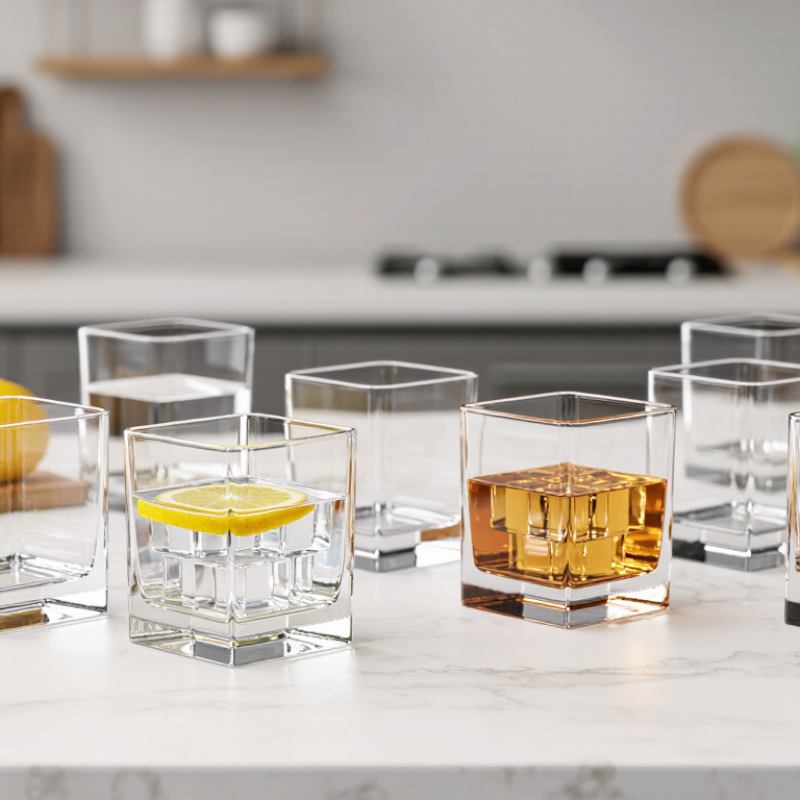
Square glassware comes in several practical forms, each suited to a different task. Square tumblers are commonly used for water, juice, and mixed drinks.
Their flat sides create a clean, geometric look, while a sturdy base can help them feel balanced on a table. Some designs have softened corners, making them more comfortable to hold than sharply edged versions.
Still, they may feel less natural in the hand than round glasses. That matters.
Square jars and canisters are useful for storing dry ingredients, snacks, or small kitchen items.
Their straight sides can fit neatly beside one another on a shelf, and clear glass makes contents easy to identify. Airtight lids are important for freshness; the shape alone does not protect food from moisture.
Square dessert dishes and serving bowls offer another option. They can hold layered desserts, fruit, or individual portions, with corners that make neat serving easier.
Look for smooth rims and glass thick enough for regular handling. Not every square design stacks safely, either, so check for stable bases and allow space between pieces when storing them.
A little awkward, sometimes.
These details help match the glassware to everyday use, rather than choosing it for appearance alone.

Square glasses are practical for water, juice, iced coffee, and simple desserts. Their flat sides show citrus slices, ice, or layers of yogurt clearly. A broad base can feel steady on a desk or crowded table. But not every design fits every hand. Corners may feel awkward, and narrow interiors can be harder to wash. Check the grip and cleaning access before choosing glasses for daily use.
The National Coffee Association’s 2024 National Coffee Data Trends report found that 67% of American adults had coffee the previous day. That measures coffee habits, not glassware sales, but it helps explain the appeal of a tumbler for home-brewed coffee. The Tea Association of the U.S.A.’s 2023 fact sheet reports more than 84 billion tea servings consumed in the United States in 2022, with about 80% served iced. A roomy square tumbler works for chilled tea, leaving space for ice and lemon. It can also hold a small serving of berries or pudding. A minor drawback: square shapes do not always nest neatly in cupboards. Check shelf space before buying a set.
Square glassware is useful when presentation needs clean lines and visible layers. A low, broad square tumbler suits water, juice, or a short cocktail; its straight sides make citrus slices and ice easy to see. For food service, square glasses can hold parfaits, chilled soups, olives, or small portions of layered salad. Keep portions modest. A narrow opening can make spoons awkward, and square corners are harder to clean than rounded ones.
The National Restaurant Association’s 2023 Off-Premises Restaurant Trends report found that 47% of adults consider takeout or delivery essential to their lifestyle. That figure is not about square glassware specifically, but it highlights the value of serving items that present food clearly and feel practical.
In a dining room, glass vessels can show color and texture; for takeaway, they need secure lids and careful packing. Glass is heavy, too. Not always convenient.
For service teams, match the vessel to the task. Use a stable, wide-base glass for desserts, and leave room above layered foods to prevent smears on the rim. For hot dishes, confirm the glass is rated for heat; sudden temperature changes can crack unsuitable glass. Square shapes look striking on a table, but they do not automatically improve service. A few awkward washes can change your mind.
At home, square glassware brings a clean shape to everyday tables without demanding special care. Its straight sides make water, juice, or iced tea look crisp, while clear walls show lemon slices and melting ice. On a crowded shelf, square-sided glasses can sit close together, though their rims still need room to avoid knocking. A sturdy, flat base also feels stable on a bedside table or patio surface. The corners are not always comfortable for smaller hands.
At a home bar, square tumblers suit short drinks served over ice, and taller square glasses work well for soda or layered nonalcoholic drinks. Their broad faces make garnishes easy to see. A quick check matters: thick bases add weight, but thin glass may be less forgiving if a glass is bumped against a sink. Square shapes do not automatically stack safely, so check the glass design before storing them that way.
In restaurants, the distinctive profile helps servers and guests identify glass types at a glance, especially when several drinks share a table. Square glasses can also give a simple place setting a more structured look. For busy service, however, the shape should feel secure in the hand and fit standard trays or dish racks. That detail is easy to overlook. Corners may collect water after washing, so glasses need enough airflow to dry fully before storage.
Square glassware can line up neatly on a shelf, but shape alone does not guarantee better storage. Check the base width, rim, and cabinet clearance before buying; square corners may waste space if neighboring pieces cannot sit close together. For everyday use, choose a smooth interior and a wide opening that lets a sponge reach the bottom corners. Those corners can hold residue. I have found that a quick visual check after washing is still worthwhile.
Care depends on the glass itself. ASTM International’s C149 test method measures thermal-shock resistance in glass containers, but it does not make every glass safe for abrupt temperature changes. Avoid pouring hot liquid into a chilled glass, and follow the maker’s dishwasher guidance. Let pieces cool before stacking, and do not force a tight stack apart. For environmental context, the U.S. EPA’s 2018 “Advancing Sustainable Materials Management: Facts and Figures” report estimated that 31.3% of glass containers and packaging were recycled. That figure does not cover drinking glasses, so it should not be treated as a tableware recycling rate. Check local acceptance before placing chipped glassware in a recycling bin.