
 +86 13438161196


0102030405
Sharing whiskey glasses
2025-07-30
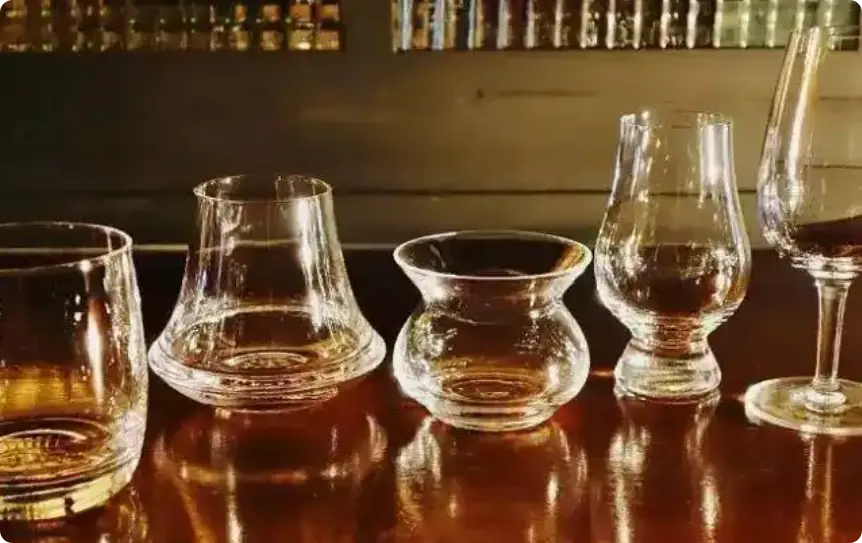
Whiskey itself has different complex flavors, and requires professional Tasting Glasses. Different glasses can interpret different styles and truths, allowing people to more accurately feel the different aromas and tastes of alcohol. There are also many different types of whiskey glasses on the market, such as Quaich, Tunbler, and Smell Glass.
Since the 16th century, Scotland has had the embryonic form of whiskey, and hospitable Scots have been enthusiastic about sharing their achievements. When welcoming and seeing off guests, they would toast with a Glass Of Whiskey, and the toast container that gradually became fixed was called quaich, which means "cup" in ancient Gaelic language.
The bowl shaped container has been given more content with the popularity of whiskey, symbolizing hospitality, adorned with various metals to express different classes and finances, sharing a glass of whiskey with quarks for sincerity and friendship, and even being given the expression of alliances during wartime (holding two ears while drinking and unable to pick up weapons).
Nowadays, quarks are no longer mere containers, and people no longer use them for drinking. However, their rich symbolic significance gives their appearance more meaning and solemnity. At weddings, the newlyweds will use it to drink as a ritual, the heads of state will exchange it as a gift (Aunt May once gave Trump a quark during his visit to the UK), and the Scottish Whisky Association will use a huge metal quark as a symbol.
As glass applications gradually became more widespread, the Austrian Riedel wine glass family spent over a decade breaking away from the classical aesthetics that once emphasized ornate carving and moving towards simplicity and functionality.
Early Tumbler cups were called tumblers, without handles and with a round bottom. As for the image of a round bottom, there is a saying that it is because the round bottom is thick, and when the cup is touched, it will quickly straighten itself like a tumbler, preventing the liquid from spilling and wasting.
However, in the early 19th century, when glass manufacturing costs were significantly reduced, Tamble had already become an excellent choice. Its straight edge design made it easier to access, and its wide mouthed design was more convenient for people who were accustomed to drinking with ice. At the time when whiskey was popular, the combination of cigar and Tumbler became a symbol of capitalism.
Nowadays, it is rare to see a round bottomed Tumbler glass, with a flat bottom, straight edges, and no handle. These are the three major characteristics of modern Tumbler glasses and the most common image of whiskey glasses. Whether it's the Rocks, Old Fashioned, or Lowball, as long as they meet the above three criteria, they are all descendants of Tamble.
When there are more categories to choose from for whiskey, those with a keen heart begin to "nitpick" the details of whiskey, paying more and more attention to whiskey tasting. This "nitpicking game" never stops. From drinking whiskey to "tasting" whiskey, the widely circulated Tumbler can no longer meet people's needs. At a time when brandy and wine had their own professional tasting glasses, whisky also needed its own dedicated tasting glasses to develop.
The Reidel family, which created Tumbler, conducted extensive research and produced Vinum in 1994. But what truly became a professional tasting glass was the Glencairn whiskey glass, which was transformed by the Raymond family in collaboration with the five leaders of the Scottish distillery in 2001.
The design inspiration comes from the tulip shaped glass used when drinking sherry. The design of the glass mouth resembling tulip flowers can preserve and gather the whiskey flavor while allowing a large amount of pungent alcohol vapor to dissipate. It quickly gained recognition from master bartenders and established its position as a whisky specific tasting cup.
In the development of whisky that increasingly emphasizes details, in addition to the common Tamble and Glencairn glasses, there are many more mainstream classic glasses that have been recognized for their unique styles.
Although Vinum did not become a professional whisky tasting cup, it is still deeply loved by whisky enthusiasts. Although the open design weakens the aroma, it expands the first contact time between the tongue and the wine, allowing people who are very concerned about taste to have more experiences.
ISO cup is the standard cup for international tasting. The strict standard design of 155mm high cup legs, 65mm diameter at the widest part of the cup body, and 46mm diameter at the mouth reflects its rigor, making it a universal cup for wine and spirits and appearing in many competitive occasions. The elegant tulip cup has a slightly outward opening (sometimes even straight) design, which does not gather the aroma but makes the sweetness in the mouth more prominent, with a balanced aroma and softer alcohol. It is also a highly renowned professional fragrance cup in the industry.
The most peculiar design is the Neat cup, which looks like an old-fashioned spittoon. The round and exaggerated design of the rim is said to combine the advantages of the Glencairn Cup and the Riedel Cup. The lower part is designed to be wide for the release of alcohol vapor and to increase the area for flavor to flow out. Closing the mouth can gather the aroma again, and opening the mouth again is said to disperse the alcohol when entering to avoid excessive concentration of alcohol affecting the taste.
Whiskey glasses, originally designed to release as much alcohol vapor as possible while gathering flavor factors, have evolved into more interesting and expressive ones. I just want to say that whiskey and whiskey glasses have never been wasted in 400 years! They provide people with new solace and storytelling for the different emotions they experience in life, such as happiness, regret, and loss.