
 +86 13438161196


0102030405
National Treasure Grade Glassware: Appreciation and Detailed Explanation of Excavated Collection Boutique
2025-06-11
The complete ancient glassware unearthed in China is used as burial objects in tomb coffins, as well as relic containers and offerings in Buddhist relics such as pagodas, temples, underground palaces, or sky palaces. Since the introduction of Buddhism, it has had a considerable connection with glass from the beginning, and glass holds a very special position in Buddhism.

Glass container unearthed from Northern Wei Buddhist pagoda stone letter in Dingzhou, Hebei Province
The Sanskrit word for "glass" means blue gemstone, which refers to the deep blue color of a gemstone. Like the color of sky blue, with a crystal clear quality, the surface and interior are transparent, and the inside and outside complement each other. Medicine Buddha is the Buddha of the Eastern Pure Glass World. Buddhism uses the clarity of glass light to metaphorically describe Buddha's virtue, so Medicine Buddha is also known as the Eastern Medicine Buddha of the Pure Glass Light.
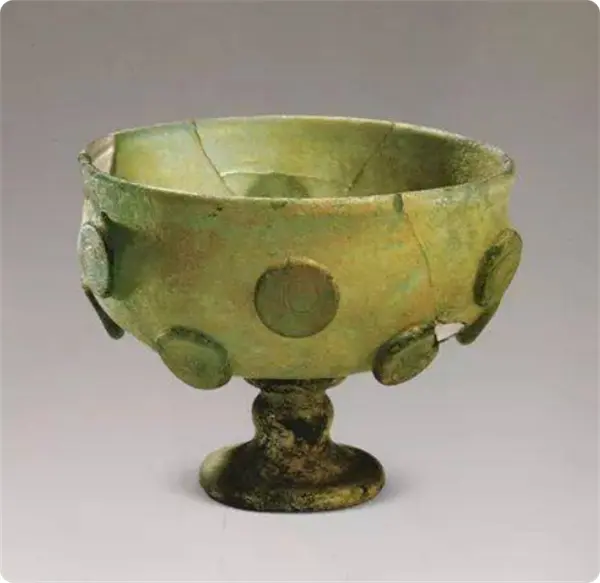
Tang Dynasty light green tall footed Glass Cups unearthed from the Senmushem Grottoes in Kuche, Xinjiang
As a religion, conversion to faith is the most fundamental. In order to attract the attention of believers and spread the Dharma, monks often strive to innovate and bring forth new ideas, rituals, architecture, and artifacts. To live with glass, death is even worse. Sheli was originally a Sanskrit transliteration of Buddha's spiritual bones or remains. According to the Northern Qi Dynasty's "Book of Wei: Shi Lao Zhi," after the Buddha passed away, fragrant wood was burned and the spiritual bones were broken into pieces, each as small as a grain. They were not damaged when struck, nor burned, and may have had a bright divine effect. They are called "Sheli" in nonsense.
Whether it is the relics of the true body or substitutes, they are important objects of offerings and sacred objects, and these sacred objects must be stored in extremely precious containers. The relic containers in ancient Buddhist pagodas in India and Central Asia were made of materials such as pottery, wood, metal, stone, and crystal. However, in China, relic containers made of glass have emerged. The reasons for this are twofold: firstly, in ancient times, glass was rare and precious compared to gold; secondly, glass was crystal clear and highly malleable, making it particularly suitable for storage and display.
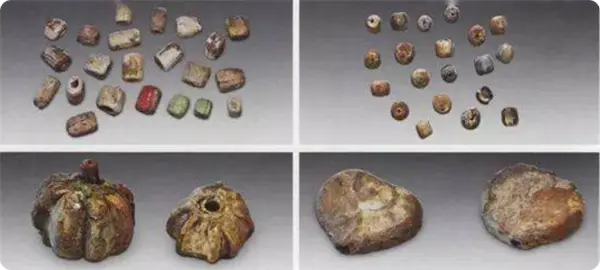
Glass beads unearthed from Northern Wei Buddhist pagoda stone letters in Dingzhou, Hebei Province
At present, the earliest relic tower base in China is the Northern Wei Buddhist Pagoda Site in Dingzhou, Hebei Province. In the rammed earth of this tower base, there is a square stone envelope with a top cover from the fifth year of Taihe (481 AD). Inside the envelope, there are several precious items enshrined by the Northern Wei royal family, including seven glass containers and thousands of glass decorative items such as pipes and beads.
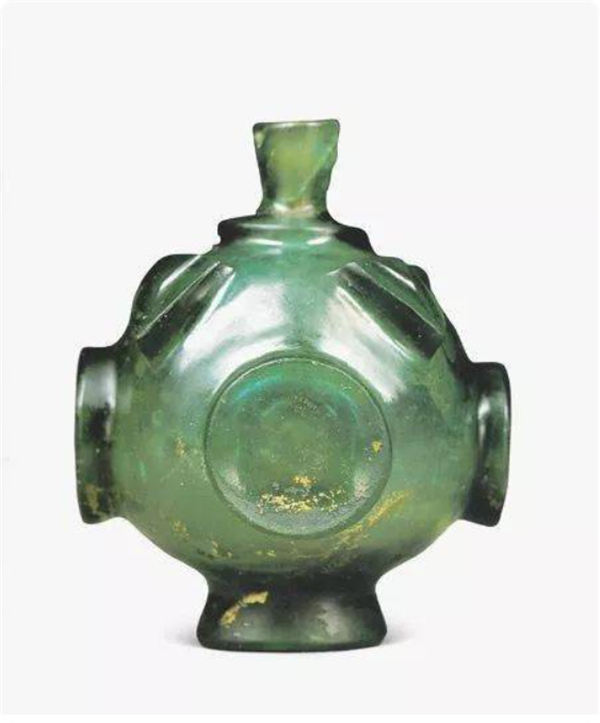
Green glass bottles from the Sui Dynasty unearthed from the tower base site of Qingchan Temple in Xi'an
A green glass bottle with a slender neck and a spherical belly, measuring 8.4 cm in height and 7 cm in diameter, was unearthed from the tower base of Qingchan Temple in Xi'an, built in the ninth year of the Kaihuang reign of the Sui Dynasty (589 AD). The belly has four protruding circular decorations with a diameter of 2.5 cm, and the shoulder of the bottle has four symmetrical triangular decorations. These circular and triangular decorations are all made by grinding after the object is formed, belonging to the glass cold processing technology. This glass bottle is precisely used to store relics.
The tower foundation of Dayun Temple in Jingchuan, Gansu was built in the first year of Yanzai (694 AD). The underground palace relic stone box contained a gilded copper box, which contained a silver coffin. The silver coffin contained a small white glass bottle, which contained 14 "relics". This corresponds perfectly to the record in the "Inscription on the Relic Stone Box of Dayun Temple in Jingzhou": "Then a brick room was opened and a stone box was obtained. There were 14 relics in the glass bottle.

Gansu Museum's Collection of Jingyuan Dayun Temple Pagoda and Underground Palace Relics Glass Bottles

Glass artifacts unearthed from the underground palace of Famen Temple in Fufeng
According to Buddhist legend, in order to better spread Buddhism, King Ashoka collected 84000 relics from King Ashikaga's collection in 84000 glass jars, 84000 treasure covers, and 84000 colorful pieces. He also commissioned ghosts and gods to create 84000 Buddhist pagodas overnight and enshrined the 84000 relics separately. At that time, Famen Temple had three identities: palace temple, national temple, and famous temple. It was a Buddhist holy site respected by the Tang royal family. Since the Tang Zhenguan period, a total of seven activities were held to welcome and send off Buddhist bones. In 1987, the Buddha's finger relic of Famen Temple was reproduced, and 17 glassware were unearthed, all of which are believed to be artifacts enshrined by the royal family.
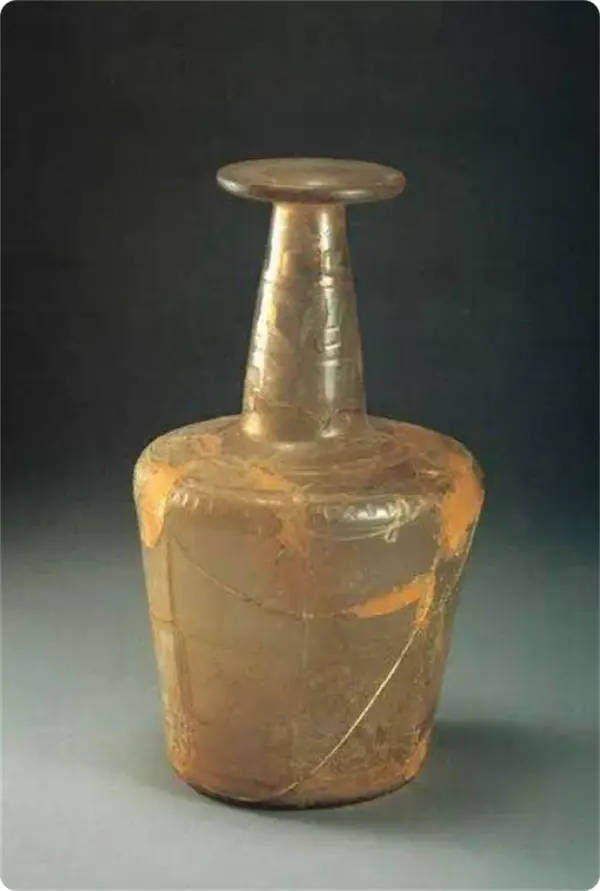
Glass bottles unearthed from the Liao Dynasty White Pagoda in Jixian, Tianjin
During the Song and Liao dynasties, local aristocrats and famous monks made great efforts to round precious glassware into pagodas and temples for worship in order to seek merit. A light yellow glass bottle was unearthed from the Tiangong stone letter of Chaoyang North Pagoda in Liaoning Province, with a height of 16 centimeters and an overall shape resembling a crouching bird with a bulging belly diameter of 8.5 centimeters. The neck of the bottle was decorated with blue glass wire, and the wrench on the handle was also made of blue glass. The bottle mouth was equipped with a golden mother and child bottle cap, and there was also a small blue glass strap cup inside the bottle. This glass bottle has a unique shape and a very thin and light glass wall. It is an Islamic glassware made by blowing method. As a sacrificial vessel, this precious item was rounded into a Buddhist pagoda during the reign of Emperor Chongxi of the Liao Dynasty.
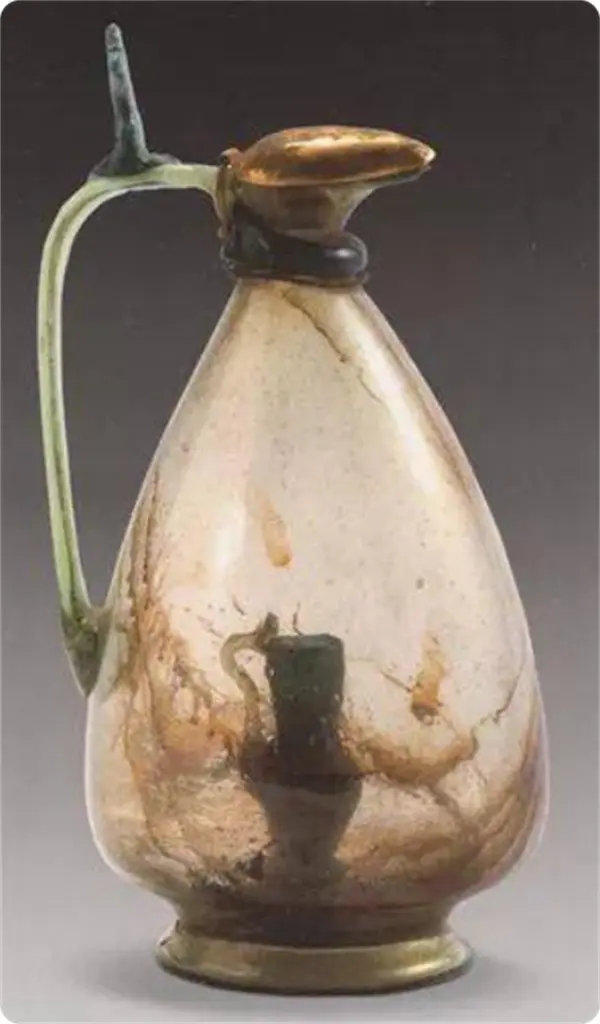
Liao Dynasty glass bottle unearthed from Chaoyang North Tower in Liaoning Province
The tower foundation of Jingzhi Temple in Ding County, Hebei Province was rebuilt in the second year of Taiping Xingguo in the Northern Song Dynasty (977 AD). The unearthed relics include various relics that have been collected and offered for relics since the second year of Xing'an in the Northern Wei Dynasty (453 AD), through the second year of Daye in the Sui Dynasty (606 AD), the twelfth year of Dazhong in the Tang Dynasty (858 AD), and the second year of Taiping Xingguo in the Song Dynasty (977 AD). Among them, there are 37 glassware. The foundation of the Jingzhongyuan Tower was built in the first year of the Zhidao reign of the Northern Song Dynasty (995 AD), and there are 34 glassware pieces inside the underground palace stone box. These glassware pieces are the most important archaeological discovery of ancient Chinese Glassware.
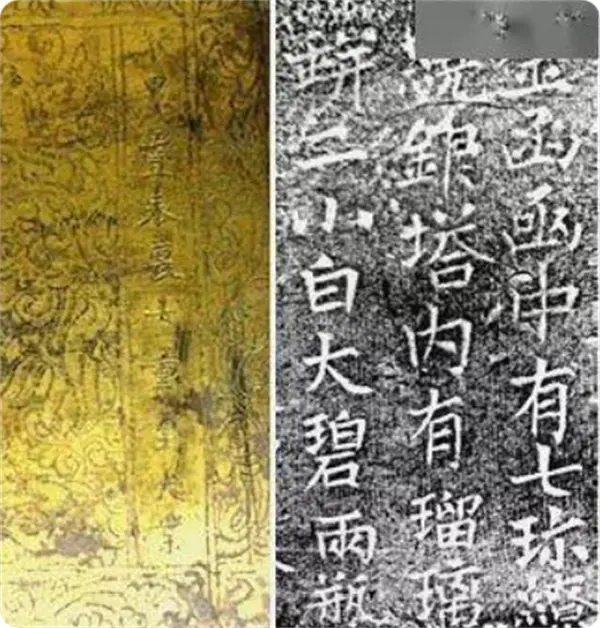
Inscriptions on glassware on Sui bronze and Tang stone letters from Dingzhou Jingzhi Temple
The Sui Dynasty stone letter, gilded copper letter, lid shaped stone letter, gilded gold and silver bowl, gilded gold and silver tower, and two glass bottles with green and white phases unearthed from the underground palace of Jingzhi Temple Pagoda form a set of grouped relic containers, which is consistent with the inscription "stacked up and down, seven layers inside and outside" on the gilded copper letter in the second year of Daye (606 AD). In the 12th year of Dazhong (858 AD) of Tang Dynasty, the stone inscription "Record of the Re burial of the True Body in Jingzhi Temple in Dingzhou" recorded: "There are seven treasures wrapped around the silver tower in the golden letter letter, two glass bottles inside, and the two small white and big green bottles are flourishing." This shows the two most core glass bottles in the "seven layers inside and outside". Until late, it was also a product of the Sui Dynasty.
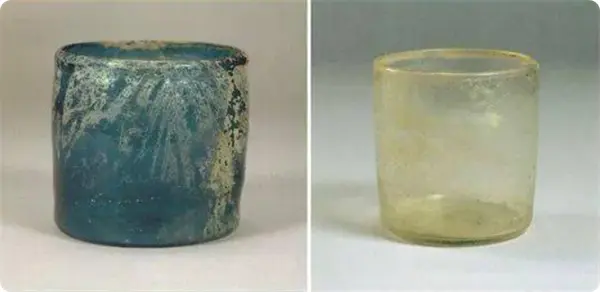
Glass straight tube cups from the Sui Dynasty unearthed from the underground palace of the Buddhist pagoda at Dingzhou Jingzhi Temple
At the end of the "Record of the True Body", it is written: "The small stone pagoda in the pagoda was originally located in Tianyou Temple, with two relics and four storage bottles: glass, gold, silver, and lacquer, placed in an old letter on the top of the pagoda." The innermost glass bottle is a transparent square small bottle with a lotus lid, which is used as a storage container for waste.
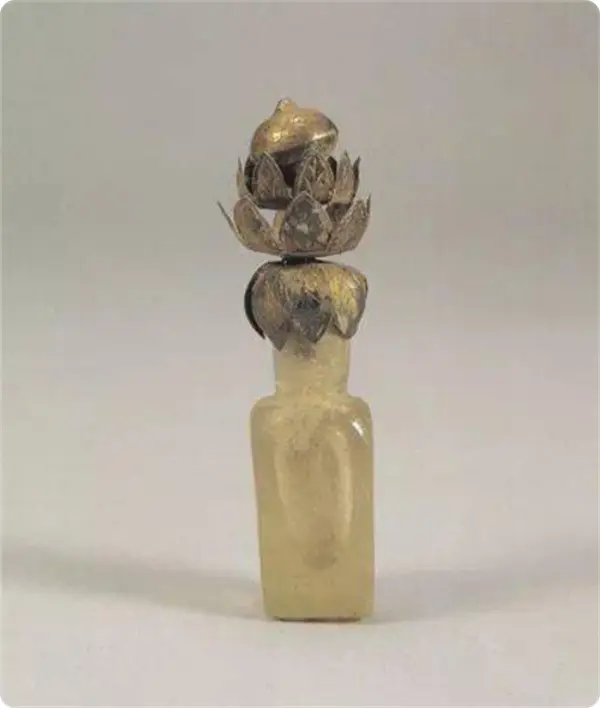
Glass vases of Sui Dynasty relics unearthed from the underground palace of Jingzhi Temple's Buddhist pagoda
Another glass bottle can also be a product of the Sui Dynasty. This bottle is sky blue, semi transparent, with a luxurious mouth and bulging belly. It is 9 centimeters high, 5.5 centimeters in diameter, and has a maximum belly diameter of 8 centimeters. Wrap a glass fiber around the shoulder and loop around the feet.
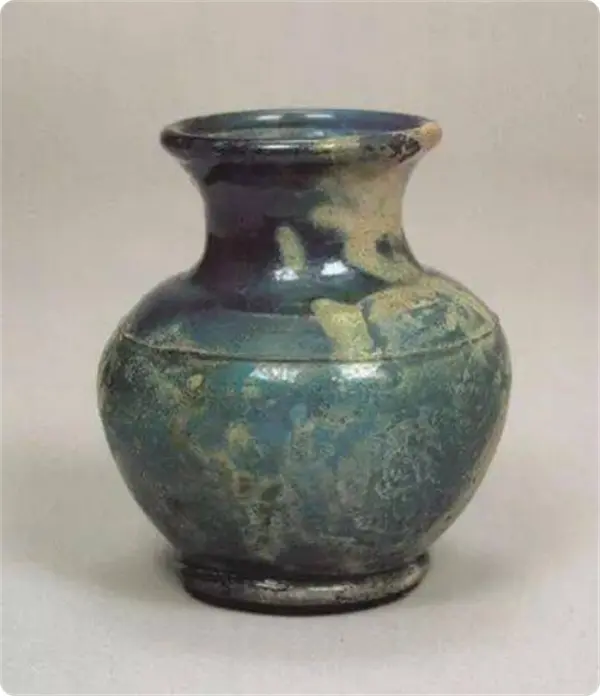
Glass poppy from the Sui Dynasty unearthed from the underground palace of Jingzhi Temple Buddhist Pagoda
Xiao Liang and Shen Yue of the Southern Dynasty wrote "The Buddhist nuns in the Buddhist Temple in the Southern Qi Dynasty are walking in a clear and beautiful way": "From the cloud, you can see Maitreya and all the Bodhisattvas. They are all golden, and there is a clear glass poppy in their hands..." The glass poppy in the hands of the Bodhisattva is a treasure, while the opium poppy is a bottle with a large belly and a small mouth, which is the traditional Chinese shape. The objects held by the Bodhisattva in the murals in Cave 225 of the Mogao Grottoes of Dunhuang are the same in shape as the Sui Dynasty glass bottles unearthed in the underground palace of Jingzhi Temple, that is, the clear glass poppy as a treasure.
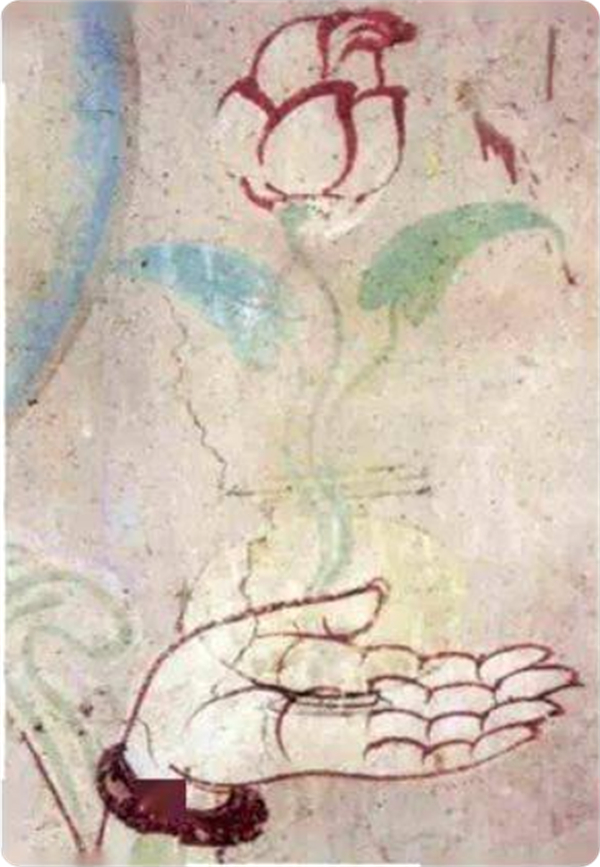
Glass poppies held by mural bodhisattvas in Cave 225 of the Mogao Grottoes of Dunhuang
There is also a Glass Bowl, green semi transparent, with a luxurious concave bottom, a wall thickness of less than 0.15 centimeters, a height of 9 centimeters, and a diameter of 15 centimeters. The lotus shaped glass bowl held by the Bodhisattva in Cave 328 of the Mogao Caves is identical in shape.
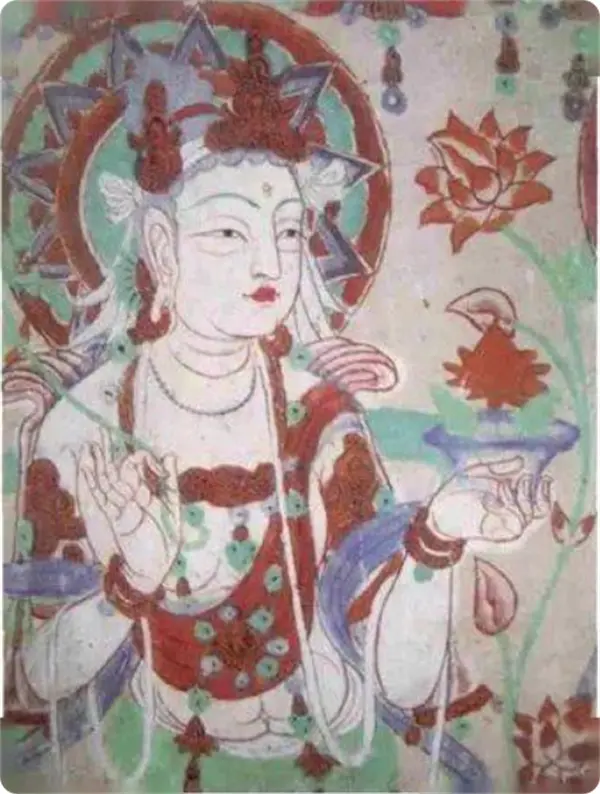
Lotus glass bowl held by Bodhisattva in Cave 328 of Mogao Grottoes
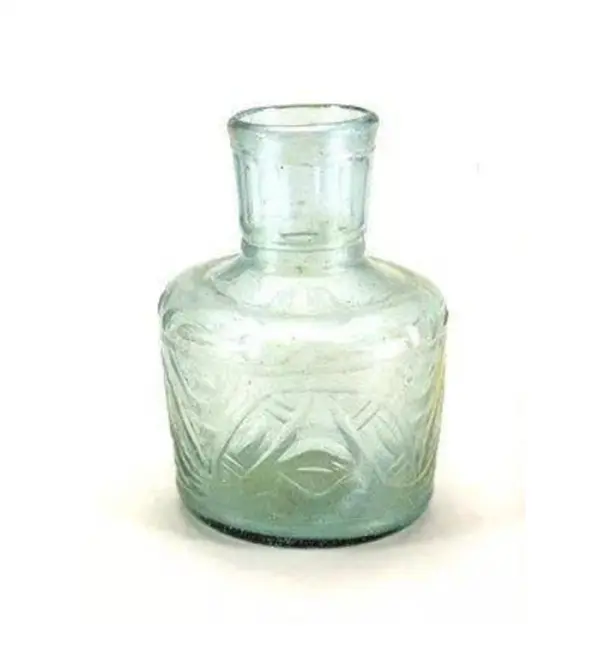
In the Song Dynasty, the glass bottle containing rose water, also known as perfume, was an important utensil for Buddhist relics. The above three thin necked glass bottles unearthed from the underground palace at the base of the tower of Jingzhi Academy were all glass containers for storing perfume.
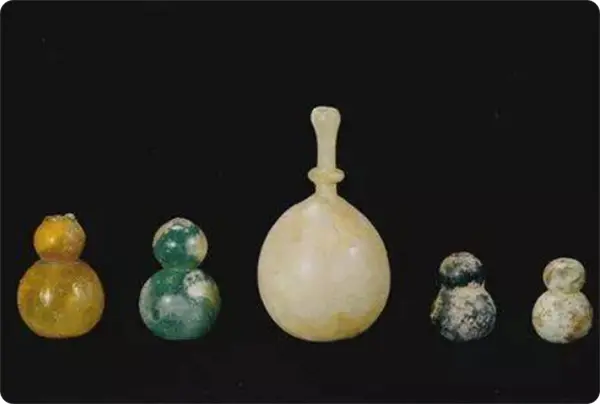
A Song Dynasty carved glass bottle was unearthed from the underground palace of Jingzhi Temple's Buddhist pagoda
More than forty glass gourd bottles and small necked bottles were unearthed from the foundations of two underground palaces, with various colors including blue transparent, green transparent, yellow brown transparent, brown transparent, and brown opaque. These glass gourds were all products of the Song Dynasty, indicating that the domestic glass manufacturing industry in the Song Dynasty had developed significantly compared to the Sui and Tang Dynasties, and could produce glass products of different colors and transparency.
Glass gourd vase from the Song Dynasty unearthed from the underground palace of Jingzhi Temple Buddhist Pagoda
In addition to the indispensable glass beads in Buddhist utensils during the Tang and Song dynasties, some fruits and other devices made of glass were also used as tribute to Buddha. The transparent physical properties and connotations of glass were also in line with the teachings. There are a total of six spherical glass "fruits" unearthed from the stupa in Lintong, Shaanxi, which are called "Sutuohan fruits" in Buddhist terminology. They were enshrined in the stupa when unearthed; Glass eggs, glass plates, etc. are often found in relic tombs as burial objects or offerings.
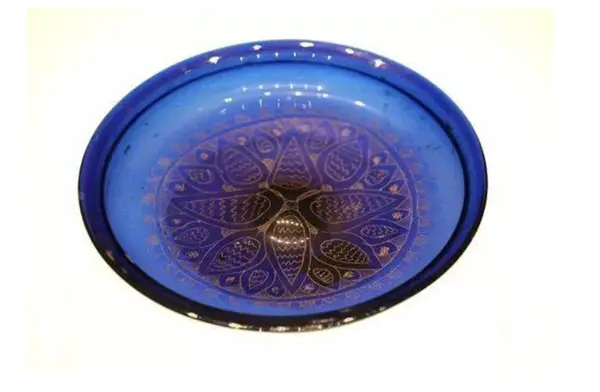
Blue glass plate with engraved patterns hidden in the underground palace of Famen Temple
Six blue glass plates with engraved patterns were unearthed from the underground palace of Famen Temple, all of which are well preserved and have magnificent patterns. The engraved patterns are made on the surface of glass using a harder and finer tool than glass after it is made, belonging to the cold processing glass technology.
Maple leaf patterned gold blue glazed plate, with a diameter of 15.9, height of 2.1, depth of 1.8 centimeters, weighing 132 grams. Straight mouth with pointed lips, shallow abdomen with a flat bottom, and a slightly convex center. Deep blue, transparent. The center of the dish is decorated with maple leaf patterns and gold, while the outer lining is decorated with water ripples and diagonal lines, and divided by concentric circles.
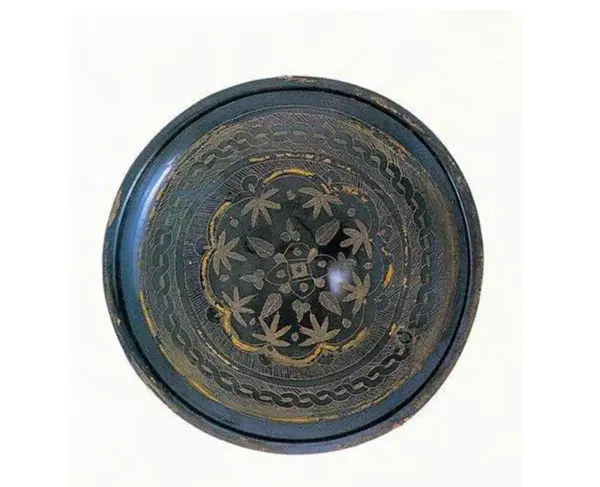
Famen Temple underground palace maple leaf pattern painted golden blue glass plate
This gold-plated glass plate is based on the glass engraving technique, emphasizing the main patterns with gold to make the gorgeous glass plate more dazzling. According to the records of the underground palace inventory, these engraved glass plates were offerings of Emperor Xizong of Tang Dynasty and were placed in the Tibetan underground palace in January of the 15th year of Xiantong (874 AD).
A total of 20 glass utensils were unearthed from the underground palace of Famen Temple, among which only one set of two glass tea cups and tea holders may be domestic glass utensils.
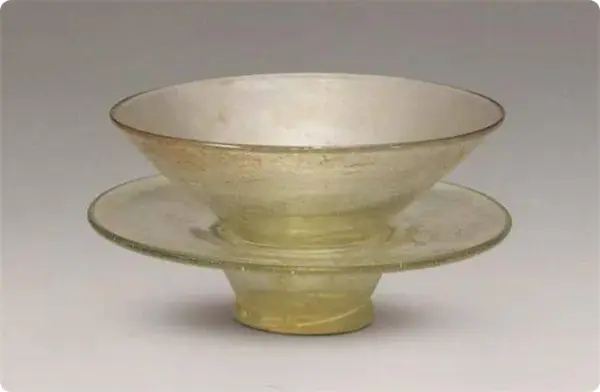
The underground palace of Famen Temple houses glass tea cups and tea trays
The glass tea cup is light yellow, slightly greenish, with good transparency, a diameter of 12.7, a height of 5.2, a belly depth of 4 centimeters, and weighs 117 grams; The color of the glass tea tray is the same as that of the tea bowl. Flat bottomed deep support, with a disc diameter of 13.7, foot diameter of 4.5, and overall height of 3.8 centimeters, weighing 138 grams, both of which are formed by mold free blowing.
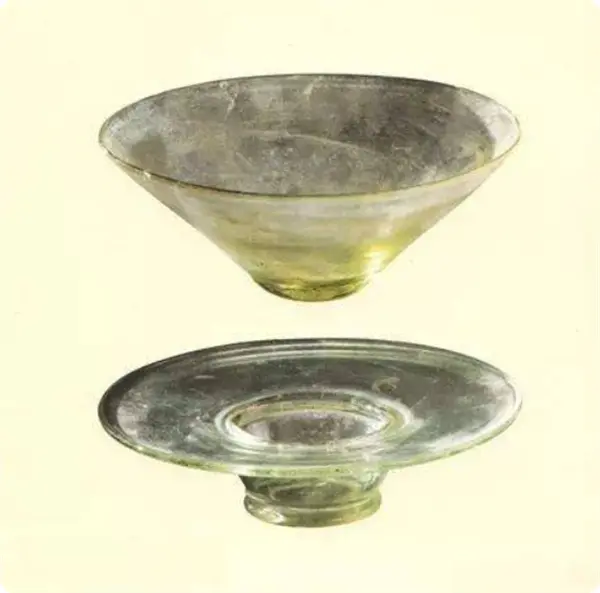
Glass tea cup and tea tray separated
The inscription on the "Clothing Tent" unearthed from the underground palace refers to this set of glass tea cup holders as "a pair of glass tea bowl Tuozi", which was also a tribute from Emperor Xizong of Tang Dynasty.
During the Song and Liao dynasties, the glass manufacturing industry was not monopolized by the imperial court, and private glass workshops had also developed. Ordinary quality glass products had become quite common, but imported glassware with complex workmanship and exquisite shapes was still highly valued by the world. Some treasures were often used as offerings and rounded up in underground palaces.
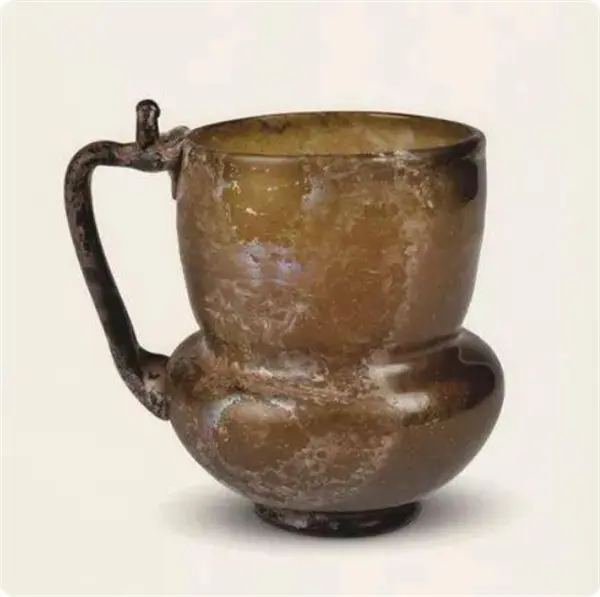
Princess Chen of Inner Mongolia Museum with a glass cup
In the seventh year of Liao Kaitai in Naiman Banner, Inner Mongolia (1018 AD), seven glassware were unearthed from the joint burial tomb of Princess Chen and her husband. One of the complete glass cups with a handle is 11.4 centimeters high, with a diameter of 9 and a bottom diameter of 5.4 centimeters. It is dark brown and transparent, with a weathered layer on the surface. The mouth is slightly closed, the diameter is cylindrical, the shoulders are bulging, the abdomen is steeply retracted, and the false ring feet are connected to a flat circular handle at the mouth and shoulders. There is a round cake shaped wrench on the upper end of the handle, which is likely a glassware produced in the 10th century on the Iranian plateau.
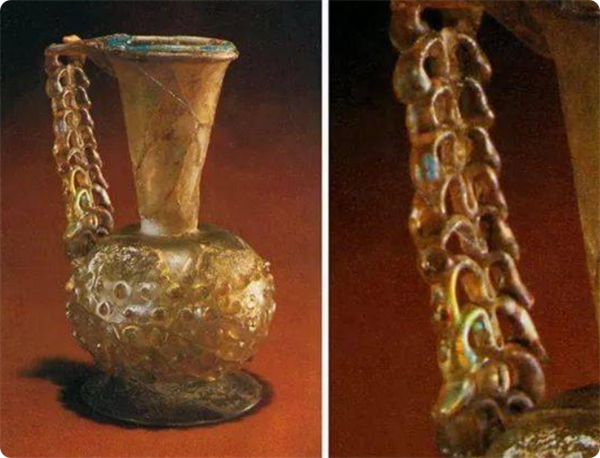
Glass bottle with milk nail pattern on the tomb of Princess Chen of Liao Dynasty
There is also a restored glass bottle with nipple patterns, measuring 17 centimeters in height, with a caliber of 6, a belly diameter of 9.5, and a bottom diameter of 8.7 centimeters. It is colorless and transparent, with a long neck and a funnel-shaped, bulging belly. It has a trumpet shaped high ring foot and is decorated with five rows of small nipple patterns on the belly wall. The most surprising thing is that the handle of the bottle is made of 10 layers of hollow glass strips, which requires glass craftsmen to fully grasp the timing of the hot melt glass turning from soft to hard during cooling, and to gradually stack it with advanced techniques to complete the complex process. This milk nail patterned glass bottle is likely a glass product from Egypt or Syria.
Among the glassware unearthed from the tomb of Princess Chen of Liao Dynasty, there is a carved glass plate with a diameter of 25.5 cm, a bottom diameter of 10 cm, and a height of 6.8 cm. It is colorless and transparent, with a weathered layer on the surface, an open round lip, a curved belly ring, and feet. The belly wall is decorated with 28 small quadrangular pyramids that were manually polished with a grinding wheel. This carved glass dish has a beautiful shape and exquisite craftsmanship. It may be a product of the Byzantine Empire in the 10th and 11th centuries, and is a unique glass treasure in the world that still exists!
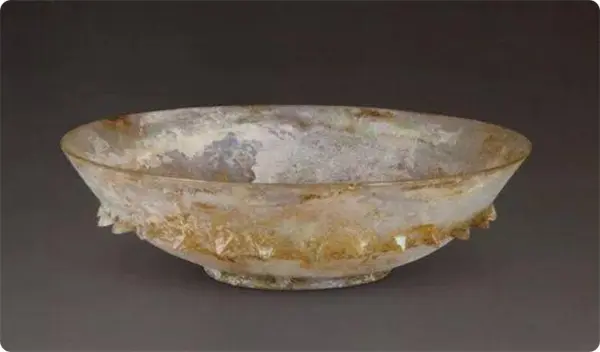
Engraved glass plate from the tomb of Princess Chen of Liao Dynasty
The glassware in the tomb of Princess Chen of Liao Dynasty comes from both the Byzantine Empire and the Islamic world, indicating that the communication between Liao and the West is far beyond ordinary people's imagination.
Long term exposure to the air or long-term underground storage can easily result in a thick layer of weathering on the surface of glass objects, causing them to lose their crystal clear characteristics. Therefore, the ancient glass seen today is not its original appearance.
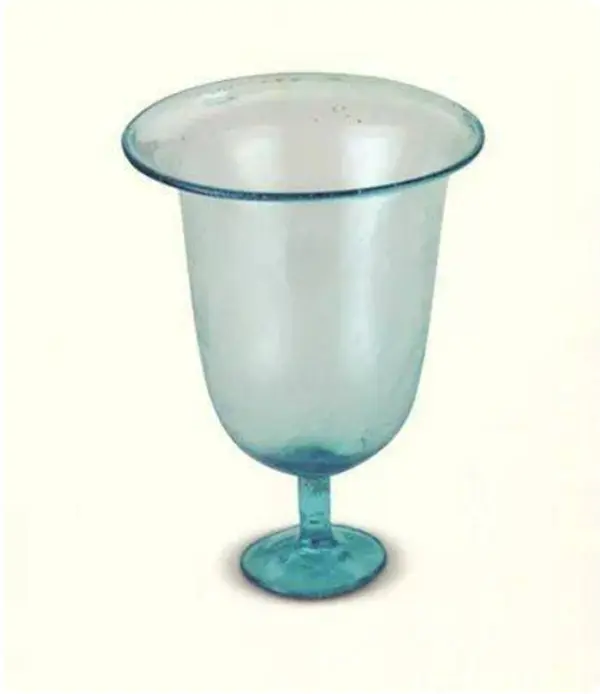
A light blue high footed glass cup from the Liao tomb in Tuerji Mountain, Inner Mongolia