
 +86 13438161196




0102030405
Detailed explanation of the difference between crystal glass and ordinary glass
2025-06-11
When it comes to crystals, people often feel the transparent, bright, fresh and charming charm of crystal glass. This type of building material is quite popular in home decoration, however, many people often confuse glass with crystal glass, and even some consumers are falsely labeled as crystal glass by unscrupulous merchants when purchasing. To help everyone better understand the difference between these two materials, we first need to clarify the definitions of crystal glass and ordinary glass.
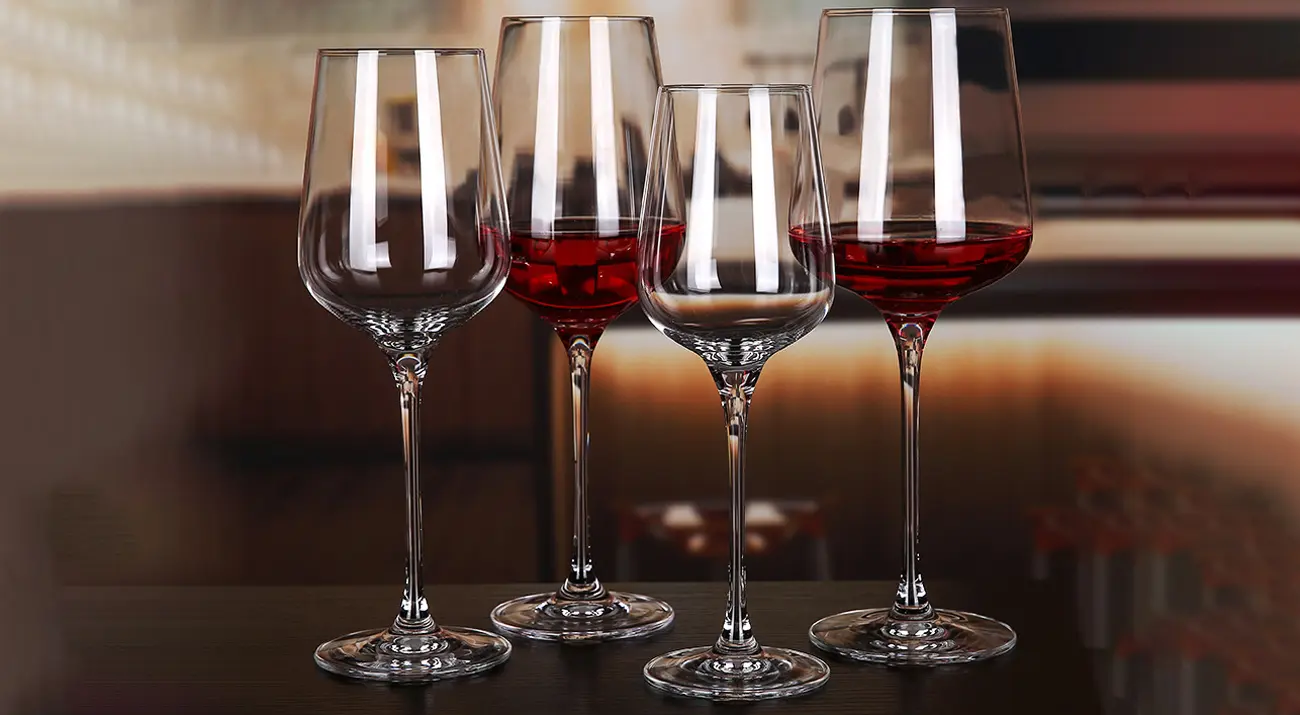
1. Comparison between Crystal Glass and Glass
1. Crystal glass
Crystal glass, also known as artificial crystal, was born when natural crystals were rare and difficult to mine, unable to meet human needs. With its excellent transparency, it is widely used to make various exquisite handicrafts and is deeply loved by the public.
2. Ordinary glass
Ordinary glass, as a highly transparent solid substance, forms a continuous network structure in a high-temperature molten state. As the cooling process progresses, its viscosity gradually increases and hardens, but it does not crystallize. This type of silicate non-metallic material is mainly composed of chemical oxides, including sodium oxide, calcium oxide, and silicon dioxide. Ordinary glass is widely used in the field of architecture, mainly for shading and light transmission, and belongs to a type of mixture. According to different production processes, ordinary Glass Can be divided into float glass and lattice glass, among which float glass is highly praised for its superior quality.
2. Comparison between Glass and Crystal Glass
Although crystal glass and glass look quite similar in appearance, they are completely different substances. These two materials have significant differences in material and efficacy. Firstly, crystal is a crystalline form of silicon dioxide, while glass is a molten mixture containing silicon dioxide. Secondly, in terms of efficacy, glass mainly plays a decorative role, while crystal not only has a piezoelectric effect, so it has special health benefits.
3. Significant price difference
The price of crystal is often several times or even tens of times higher than that of glass.
4. The physical characteristics are vastly different
(1) Crystal, as a crystalline body, has a high hardness, reaching Mohs 7, while glass has a lower hardness, reaching Mohs 5.5. Therefore, crystals can leave scratches on glass, while glass cannot.
(2) Crystal has excellent thermal conductivity, and it feels cold when lightly touched with the tip of the tongue. In contrast, glass appears warm.
(3) With the help of a polarizer, we can observe that crystals have good transparency, while glass does not possess this characteristic.
When choosing, these different physical characteristics will help us easily distinguish between crystal and glass.
5. Different processing techniques
Glass can be formed by hot casting, which not only saves materials but also reduces costs. However, as crystals, once heated and melted, they cannot be reversed, so the hot casting method cannot be used. On the contrary, it can only be processed through cold processing methods such as cutting and grinding. Although this method is more material and labor-intensive, it also gives the crystal higher hardness, making it more wear-resistant. In contrast, glass has lower hardness and is prone to scratching. In addition, crystal has better stability and can maintain its original color for a long time, while glass is prone to yellowing.
When choosing Crystal Glassware, we can understand its lead oxide content and production country by observing the product label. At the same time, a comprehensive judgment is made by combining weighing, observation, and tapping methods. High quality crystal glassware should have a precious metal like weight, pure color, and a crisp bell sound when struck. In terms of craftsmanship, the processing difficulty of irregular vessels is the highest, and the level of hand carved vessels is also higher. The appearance and styling vary from person to person and cannot be generalized. In terms of practicality, white crystal has practicality, while painting and sandblasting techniques balance practicality and aesthetics. Hand carved colored vessels are of the highest quality and are often used to showcase personal taste and for collection purposes.
Crystal, a precious gem crafted from natural quartz crystals, is fundamentally different from ordinary glass. Although ordinary glass is mainly made of quartz, its properties are vastly different from those of crystal after high-temperature processing. Crystal glass, also known as Crystalline Glass, is a type of crystal like material that combines the brilliance of crystal with the transparency of glass. In the production process, there are two main techniques for crystal glassware: manual blowing and mechanical pressing (blowing). The manual blowing process is exquisite and requires superb skills. Each piece of work embodies the hard work and wisdom of the craftsmen. At the same time, due to the addition of rare metals in the pigments, the works appear more noble and unique. Therefore, although the manual blowing process is time-consuming and laborious, the resulting crystal glassware is priceless. The mechanical pressing (blowing) process places more emphasis on efficiency and large-scale production. Although the output is large, each piece of work maintains the unique charm of crystal glass. In addition, the recently launched iridescent sandblasting vessels have elevated the craftsmanship of crystal glass to a new level. Although the variety is still limited, it is enough to attract attention.